H+K Strategies Interview with Buzzfeed’s Jonathan Perelman

The H+K Strategies content team is busy in Cannes, doing interviews with various creative industry leaders and opinion-makers, and we will be sharing their content daily!

They chatted with Jonathan Perelman, GM Video & VP of BuzzFeed. From cat-food to Tony Blair and the New York subway, they covered a lot of ground…

H+K Strategies Interview with Buzzfeed's Jonathan Perelman

H+K Strategies content team is busy in Cannes, doing interviews with various creative industry leaders and opinion-makers, and we will be sharing their content daily! They chatted with Jonathan Perelman, GM Video & VP of BuzzFeed. From cat-food to Tony Blair and the New York subway, they covered a lot of ground… кредитка онлайн по почте

Just like the Future, PR doesn’t fit in the containers of the past: ask Millennials!

Guest blog post by Pascal Beucler, SVP & Chief Strategy Officer of MSLGroup

So the question is back again, as the Cannes Lions Festival has started: why is it that the PR industry is not “more creative” – if creative at all?

With 60% of PR professionals and 69% of clients believing that “the PR industry lacks big ideas” (according to the Holmes Report’s 2013 Creativity in PR study), it looks like the answer is not very encouraging….

In my humble opinion, there could be some sort of misleading-ness here and a quite unfortunate semantic misunderstanding.

When you hear people telling you that PR professionals are not good at putting forward and driving “big ideas”, what these people actually refer to, and “come from”, is the traditional mindset of advertising: for them, a “big idea” is still what organizes a 30 second commercial, and is eventually carried through collateral material.

No need to say that this vision is a bit outdated.

Let’s look at figures: three years ago, TV commercials still represented 55% of cases. In 2013, digital channels, and particularly social media, jumped to 85% of the cases, “making it by far the most-used channel in the competition” (See “Why Creativity Sells” in Sunday, June-15-2014 Lions Daily News 2014).

I would argue that, in 2014, the only valid criteria when it comes to judging creativity is today’s Engagement environment.

A creative campaign is above all a campaign, which creates a high level of engagement with people and communities.

(The rest is literature, or food for endless debates in ADs’ clubs)

Having been one of the three judges, together with Marnie Kontovraki, Global Heineken Consumer PR Officer, and Michael Frohlich, Managing Director UK and EAME Consumer Marketing Practice for Ogilvy PR, for the inaugural Young PR Lions competition at the Cannes International Festival of Creativity, I lived a vibrant and very insightful experience with 14 teams from 14 countries, with each team comprising two young agency PR professionals, all Millennials born after 1985 – an experience which brutally challenges the current doxa on what creativity is about.

It’s so inspirational to see the hunger and passion with which these young professionals are taking up Citizenship challenges – but then that shouldn’t surprise us: as a global survey MSLGROUP ran last month in 16 countries underlined, Millennials today consider themselves empowered to help businesses and organizations change the world. As our survey reveals it, Millennials really are « Game Changers », with a « fresh » vision on business and Citizenship. (http://blog.mslgroup.com/why-and-how-businesses-need-to-partner-with-millennials-to-better-manage-resilience-relevance-resonance-in-troubled-times/)

My colleagues and I at the jury saw a lot of genuine enthusiasm and strategic clarity in the vision the 14 teams developed, a true maturity from a creative standpoint and a lot of agility in the execution : these Asian, African, European, Latin American Millennials are global, boundless minds and really bold folks – their future is bright, and so is the future of our industry. They definitely don’t see big ideas the good old way, but as powerful 360° weapons which actually transform and reinvent PR the way we used to do it. And no need to say that it’s all digital and social, therefore effective and costless.

Many insights provided by the teams were about Millennials’ commitment to make the world a better place. « Rouse the Millennial Army ! »,  « We can change the world ! », like one of the awarded teams said ! Yes, they love to be part of the change they want to see, and that’s terrific.

Self-expression, storytelling, sharing, crowdfunding – all the key ingredients of what creates success today in the world of PR (People Relations) are here, and it’s an amazingly refreshing and rewarding lesson. The Millennials are passionate about many things, global issues and causes, and they expect businesses, organisations and PR agencies to tap into their passion.

We should agree that the age of conversation is very different from the age of advertising, with its vertical “big ideas”. It’s now all about big data and smart ideas, which is pretty different, in many ways:

  • the ideation and very often the content are largely “people generated”: tools like Spike, Trendsboard or Topsypro help gather “People’s insights” to deliver successful “People’s inside” campaigns
  • the tempo of guerilla marketing is real-time, with daily messages if needed, whether a viral video, a social game, an event etc.
  • the interaction between brands, agencies, people and communities is permanent, and fruitful


Over the past few years, we thus moved from mass propaganda, with its heavy bombardment of “big” and simplistic top-down messages, to multifaceted engagement strategies. Advertisers are good at bombardment, we – experts in PR, for People Relations – are far better at the latter.

Our PR “agency of the future” model should indeed derive business intelligence and data analytics to build creative content, nurture shareable conversations, and engage people and communities.

MSLGROUP’s Chief Strategy Officer, Pascal Beucler holds BAs in History and Language Sciences, a master’s degree in Linguistics and a postgraduate degree in Semio-Linguistics. In 1987 he joined Intelligences, a subsidiary of Publicis, and in 1992 he became Managing Director. In 1994 he was promoted to Partner at Publicis Consultants, and then to General Manager of Carré Noir in 2001. Pascal is an Associate Professor at CELSA (Paris IV Sorbonne) and a visiting professor at HEC – one of France’s top business colleges. He has conducted research and published articles on various topics and in particular on the relationship between text and image. In 2005 Pascal was named Vice-President of Publicis Consultants | Worldwide, in charge of Brand Strategy and development of its international network.

Dreams and Fears by Ann Maes

Guest blog post by Ann Maes, Managing Director of Ogilvy Group Belgium

The first mail that hits my eye this morning is: ‘How do you define creativity?’ Claire Bridges sends it to me, one of my fellow jurors on the Cannes PR Lions jury. Put 21 clever creative PR/communications people from all over the globe in one jury room and not a single one will come up with the same definition. I like to think that everybody can be creative, so I send my partner a quick mail with that one question. He is a wine entrepreneur and has a knack of thinking out of the box. It only takes him two minutes to mail me back: When I was seventeen I stumbled upon this quote of jazz musician Charles Mingus. ‘Making the simple complicated is commonplace; making the complicated simple, awesomely simple, that’s creativity.’


Not bad.


Like every other fussy creative strategist I feel like telling him that something is missing. Something along the lines of: ‘Turning the ordinary into the remarkable – all whilst being truthful’. I will only send him that thought later on, as I reckon that he must be off sharing remarkable stories about wine and the men and women that are producing it.


That thought leads me to ‘storytelling’. Read: the delicate art of crafting the right kind of creative content. When storytelling is at its best, it is light years away from the bland content that so often lands on our plates. When stellar, storytelling is about magnetic little gems.


Do I see you frowning there? Don’t worry – it must be me: I often get asked what I mean by that. Here’s how I recently explained it to my 69-year-old dad. ‘Magnetic stories have many different faces: it can be articles, pictures, one-liners, art, cartoons or videos that touch you in such a way that it creates a strong emotion of recognition. Or even better: that is creates the urge to share it with others. Not necessarily via social media channels, but even so when having a good old chat.


I mostly get people to nod when I put it like that. Some inquisitive souls -including my beloved dad and juniors looking for a job- confront me with questions that grant them access to the next level: how can you tell upfront whether content is good enough to tear the house down – or not?


I tell them about context then: about the importance of understanding whom you talk to, about the importance of sharing a story when the time is right. If you know what the dreams and fears are of the people that you are trying to sweep off their feet, you are well on your way to just do that.


So how ‘magnetic’ is the content I’ve seen so far in Cannes?


Really good.


Pretty bad.


I find it remarkable to notice how many wonderful creative campaigns don’t make me tick – for the one and simple reason that the content is just not up to par.


I had a chat with a young creative girl from Romania on this topic when eating an ice cream on the Croisette. In five minutes she quizzed me about content, context and pitched a story that made me smile and shiver. I forgot to ask her contact details, but in case she ever reads this – here’s my message to you: ‘Call me: talent like yours is rare.’


PS: My partner sent me another mail later on – pointing out that creativity is also about authenticity, honesty and empathy. His message made me smile. Creativity is not something people in creative industries own: it is the oxygen that keeps every passionate professional going. 

Ann Maes is Managing Director of Ogilvy Public Relations for its Brussels-based operation.

Ann returned to Ogilvy PR after an absence of twelve years. In the intervening time she has demonstrated excellent client counselling and business-building skills through leadership roles at Leads United and most recently as the founder of PrideTBWA.

Ann has worked across a range of sectors and companies in her career – with a focus on integrated campaigns, change communication and reputation management. Ann’s work has won many awards, in Belgium and abroad. Her clients over the years have included: McDonald’s, Coca Cola, Ahold Group, Pfizer, Sabic, Microsoft, Amgen, MasterCard, KBC, Proximus, KPN and Stanley.

H+K Strategies Interview with celebrated photographer Aaron Huey

The H+K Strategies content team is busy in Cannes, doing interviews with various creative industry leaders and opinion-makers, and we will be sharing their content daily!

Listen to their conversation with Aaron Huey, celebrated photographer for National Geographic and others, wearer of gold shoes and the only man we know who got married on a tank…

Cannes Lions 2014: Is the PR industry creative enough? by Arun Sudhaman

Guest blog post by Arun Sudhaman, Editor in Chief of The Holmes Report

That might be the type of question designed to raise the hackles of the good PR folk travelling to the Cote D’Azur for this year’s Cannes Lions. Yet it is a question that needs asking, particularly when you consider the industry’s mixed record in the PR Lions category, which the Holmes Report has been covering from its launch in 2009.

In 2012, the continued debate over the industry’s creative prowess led us, along with NowGoCreate, to launch the Creativity in PR study, a major global survey of 600 PR people from more than 35 countries across the world. In particular, we asked the PR industry whether it agreed with the claim that PR agencies lack big ideas, a contention that has been heard at Cannes.

Last year’s survey found that respondents, in general, continue to agree with the claim that PR agencies lack big ideas. 60 percent believe the statement is a fair one, essentially the same proportion as 2012. Among clients, the view is even more pronounced, with 69% believing that the PR industry lacks big ideas.

“The PR industry has a range of obstacles in putting forward and driving ‘big ideas’ and very few agencies have managed to master the art of both creating a ‘big idea’ and harnessing the power of their own structured traditional PR techniques,” read one survey response from an agency executive in Australia.

Significantly, the client-agency divide found here extends to perceptions of the industry’s creative quality. Broadly speaking, opinions of creative quality within the PR industry have not shifted much over the past 12 months, demonstrating that ambivalence persists. Once again, more than half describe it as ‘ordinary’ or worse. 38% say it is good and just 7% label it ‘inspirational’. One in 10 describe it as ‘unsatisfactory’.

Significantly, clients have a considerably more jaundiced view of creative quality than their agency brethren. Just 39% describe it as inspirational or good, while more than 60 percent see it as ordinary or worse. Once again, it appears that agencies are falling down in their quest to prove to clients that they have the necessary creative credentials for today’s engagement environment.Respondents in AngloSaxon markets — Australia (56%), the UK (54%) and US (50%) — held the most favourable view of creative quality, with Asia (38%) some distance behind.

Further clarity is provided when respondents are asked whether they think the quality of creativity in PR campaigns has improved over the past year. 61% disagree that it has, suggesting that there are no quick-fix solutions to raising creative standards.

Again, clients are even less convinced that quality is improving; just 26% agree with that statement. Latin American respondents (71%) are least likely to see an increase in creative quality, followed by US (69%) and UK (66%). Australia stands out, with just 59% disagreeing with the notion that the quality of creativity in PR has improved over the past year.

Those results provide plenty of food for thought. If nothing else, the hope is that this year’s Festival will definitively showcase the PR industry’s impressive creative credentials.


Arun Sudhaman is partner and managing editor of the Holmes Report, the global PR industry’s most authoritative and credible source of information and analysis 

In this role Arun oversees the Holmes Report’s global content offering, including its analysis and insight into public relations and communications trends and issues. Since joining the Holmes Report in 2010, Arun has led a comprehensive relaunch of the title’s content platform, including its digital presence and new products such as the Influence 100, Global Rankings and Creative Index. 

He brings to the position more than a decade’s experience as a journalist and digital content specialist, most of which has been spent covering the global PR, marketing and communications industries .

Prior to joining the Holmes Report, Arun spent more than seven years with Haymarket Media in Hong Kong, Singapore and London. He joined Haymarket title PRWeek UK in January 2009, after covering Asia’s media and marketing landscape at sister Haymarket title Media Asia (now Campaign Asia-Pacific) in Hong Kong and Singapore.


Five Good Reasons To Stay Close To ICCO During Cannes Lions by David Gallagher

Guest blog post by David Gallagher, ICCO President & CEO EMEA, Ketchum

In my experience, PR people respond to the Cannes Lions Festival in one of three ways:

  • The doubters:  ‘Not for me. It’s really an advertising festival and not where serious PR should be.’
  • The curious:  ‘It sounds interesting, but I’d need to know more before investing that kind of money.’
  • The true believers: ‘Cannes is where the action is, and love it or hate it, we need to be in the thick of things.’

As a delegate from the devout faction, I’m pretty sure nothing comes close to matching the Festival as a source for inspiration, insight and foreshadowing for our increasingly integrated and global business. But in the past I’ve looked at Cannes Lions as both doubter and curious voyeur, so I’m pleased to see ICCO throwing back the curtains on the festival with useful information and perspectives for the Festival first-timers, grizzled veterans and even the stay-at-home critics.

Wherever your opinion sits, here are five good reasons to stay close to ICCO during the Festival through our onsite booth, this website and social media:

  1. Strength in numbers.  Even Cannes old-timers can find the sheer crowds at the Festival overwhelming, and it’s always nice to see a familiar face.  Use the ICCO booth 12.01 in the Palais as a rallying point for networking and meetings, and for the latest on PR-related news and information.
  2. All the news that’s fit to share.  We’ll be collating and sharing perspectives on what’s hot – trends, learnings and analysis – from a range of sources, including our four main agency supporters:  GolinHarris, H+K Strategies, Ogilvy and Ketchum (go team).
  3. It’s a festival in the South of France, after all. We’ll be socialising in advance of the PR Awards celebration on Monday night, toasting what should be a great showing for the whole industry. If you haven’t yet RSVP’d’d, there’s still time.
  4. Meet the Young Lions.  For the first time, teams of two under-28s from up to 20 countries will vie to win the golden Young PR Lions accolade at an on-site competition. We’ll toast their success and wish them well in this glimpse of the future of our business.
  5. There’s a world outside PR, you know.  One of the great opportunities of Cannes Lions is to see creativity expressed through work of those trained in other disciplines.  We’ll encourage participants to share what they liked (or didn’t) throughout the festival with the hashtags #ICCOCannes for general observations and #WeLovePR for professing your industry support.

See you on the Croisette!


As a Senior Partner and CEO of Ketchum’s European operations and chairman of the UK agency, David Gallagher brings more than 20 years of public relations experience, both as a client and as a senior agency adviser, to some of the world’s leading brands and companies.

David Gallagher oversees Ketchum’s nine European agencies and their specialist services, which include consumer public relations, healthcare communications, corporate affairs and social responsibility, public affairs, change management, and clinical trial recruitment.

He is president of the International Communications Consultancy Organization (ICCO), the global umbrella network of 30 national PR agency trade associations, and a fellow and past chairman of the UK Public Relations Consultants Association.  He chairs the World Economic Forum’s global agenda council on the future of media, and was the 2014 PR jury president for the Cannes Lions International Festival of Creativity.

What Young Lions Can Teach Us Old Cats

Guest blog post by David Gallagher, ICCO President & CEO EMEA, Ketchum

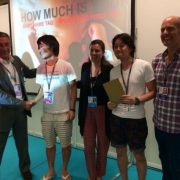
Earlier this year, ICCO helped launch a new feature of the Cannes Lions International Festival of Creativity, the Young PR Lions – a global competition of 28-and-under talent drawn from the world’s leading agencies to solve a pressing communications problem, in real time.

This was a calculated risk, but with huge upside. Showcasing the power of PR with our best and brightest stars on a global stage is a statement of confidence about how far PR has come, and how promising the future is for those who do it right – with the passion and expertise fostered by ICCO and its members associations around the world.

Still, someone had to light the way, so hats off to the ICCO Board for supporting the idea and to our agency supporters, H+K Strategies, GolinHarris, Ogilvy PRand my own team at Ketchum for seeing the opportunity and walking the talk of commitment with financial support.

I have now how had the opportunity to interact with many of these young lions in three countries (as a juror in the UK completion, as a coach for the German team, and as a colleague of the Austrian team, drawn from our agency in Vienna), and I can safely say that PR is a great investment with pros like this rising through the ranks.

At the final round of competition at Cannes, a panel of industry veterans will decide who takes home a trophy, but in the meantime I have been struck by several lessons the young lions can teach old PR cats like you and me:

  • To rise, you have to shine – and vice versa.  The first thing that has struck me about these professionals? Their willingness to rise up to a challenge, risk disappointment, and show what they can do.  To stand out, you have step up.  These guys are fearless.
  • We are defined by what we bring.  Today. Experience is priceless, but often we use it as an excuse (‘tried it – won’t work’) to avoid new ideas or big thinking, rather than as a guide to keep innovation on track. In these competitions, with just a few hours to propose solutions, the teams are unfettered by decades of experience; they just let the biggest ideas break through. In the real world of course, experience can be a great filter, but it should never drown out creativity.
  • Social is the new traditional media.  Strange how often I hear experienced PR advisors still talking about social versus traditional media. Not one young lion draws such an artificial distinction; they are much more likely to discuss content or channels in term of earned, owned, shared or paid.
  • Problems are solved with changes in attitude or behaviour. Not with ‘coverage.’ One of my happiest discoveries: how many of their programs / campaigns focused on what would change minds in order to deliver objectives, rather than what would generate ‘media interest.’

Don’t get me wrong.  We old cats still have a few tricks to teach. For example, ‘creating buzz’ is not really a meaningful goal.  What’s cool or trending is not always an insight in itself. And budgets are quite important in the real world.

But if these young lions are at all representative of the wider agencies we’re leading, we have a lot to look forward to.


As a Senior Partner and CEO of Ketchum’s European operations and chairman of the UK agency, David Gallagher brings more than 20 years of public relations experience, both as a client and as a senior agency adviser, to some of the world’s leading brands and companies.

David Gallagher oversees Ketchum’s nine European agencies and their specialist services, which include consumer public relations, healthcare communications, corporate affairs and social responsibility, public affairs, change management, and clinical trial recruitment.

He is president of the International Communications Consultancy Organization (ICCO), the global umbrella network of 30 national PR agency trade associations, and a fellow and past chairman of the UK Public Relations Consultants Association.  He chairs the World Economic Forum’s global agenda council on the future of media, and was the 2014 PR jury president for the Cannes Lions International Festival of Creativity.

Cannes Lions Predictions for PR 2014

Guest blog post by David Gallagher, ICCO President & CEO EMEA, Ketchum

As I write this from cold, grey and wet London, it’s hard to believe that in just a few weeks the world’s marketing and communications geniuses will descend on the sunny South of France in droves for the Cannes Lions International Festival of Creativity.

The PR community has been making itself felt at Cannes with increasing numbers and influence for the past few years, and there is every reason to think 2014 may be the break-through year we’ve been waiting for.  So while the creative are choosing which ironic t-shirts to pack and local restaurants are stockpiling crates of rose, let’s make a few predictions:

  1. 2014 becomes the year many PR people say they ‘got’ Cannes.  While our interest has been mostly around the awards competition and the mainstage speakers, 2014 marks the first year of a Young PR Lions competition.  Two-member teams from agencies around the world, thanks to sponsorship of ICCO and the underwriting support of global agency leaders Ogilvy,GolinHarris, H+K Strategies and my own employer, Ketchum, will answer a brief and demonstrate the problem-solving power of PR before a jury of global experts.  This is not a prediction, but a fact, but I believe it will mark the beginning of a tipping point, when sufficient numbers of PR people – especially our young influential – are engaged in the Cannes phenomena to make it part of their annual ‘inspiration diet’ for years to come.
  2. A PR agency wins a Gold Lion in a non-PR category. I’m not sure – this may have already happened – but with the quality of PR agency submissions year on year, and with greater familiarity with the overall workings of the festival, I think this will be the year where one of us wins big in another category.  And why not?  Most great campaigns are designed to be shareable and newsworthy from the get-go.
  3. AVE continues to decline as a measure of campaign effectiveness.  Last year’s jury made a point of frowning on advertising value equivalency – AVE, the dubious practice of assigning editorial news coverage an advertising value as an evaluation metric.  We urged future competitors to use real business, policy, behavioural  or social outcomes as the yardsticks for effectiveness.  I doubt AVE will die completely this year, but I hope it’s in in its last throes.
  4. A PR agency will win the PR Grand Prix!  Last year I predicted this would happen within two competitions, but that was a hedge.  After visiting many top agencies and national ICCO member associations, I am convinced that this is the year one of us takes home the biggest prize of all from the festival’s Monday ceremony. Network agencies are finding their best work to enter, and smaller independents are stepping into the ring with remarkable entries; surely one of theme will prevail this year.


In any case, this year’s festival promises to be a memorable and inspiring demonstration of global creativity, and for the first time ICCO will be on hand to welcome members of the PR community with hospitality and networking.  Please look for the ICCO booth in the Palais for information on ICCO activities and events.

As a Senior Partner and CEO of Ketchum’s European operations and chairman of the UK agency, David Gallagher brings more than 20 years of public relations experience, both as a client and as a senior agency adviser, to some of the world’s leading brands and companies.

David Gallagher oversees Ketchum’s nine European agencies and their specialist services, which include consumer public relations, healthcare communications, corporate affairs and social responsibility, public affairs, change management, and clinical trial recruitment.

He is president of the International Communications Consultancy Organization (ICCO), the global umbrella network of 30 national PR agency trade associations, and a fellow and past chairman of the UK Public Relations Consultants Association.  He chairs the World Economic Forum’s global agenda council on the future of media, and was the 2014 PR jury president for the Cannes Lions International Festival of Creativity.


Education key to agency integration

Guest blog post by PRable

Somewhat bafflingly, there are many people in the PR industry that disregard social media or view it as a flash-in-the-pan that doesn’t complement traditional public relations.

Unfortunately this view is likely to limit their lifespan in PR and act to the detriment of them and their clients. The key to this is education, and it is never too late to learn.                                                                                   

An Integrated Campaign

The concept of an ‘integrated campaign’ is a misnomer – every campaign should be integrated. With newspaper sales dwindling, more people watching on-demand TV, and an increasing number of people only sourcing news from the web, the demographics of media consumption have completely changes in the last decade.

Social media allows you to reach a dedicated audience of unlimited size. Most importantly, if they follow you, they want what you are offering and want to hear what you have to say. Can you say this of any other media form?


Journalists online

We all know that journalists are almost always up against a deadline. Few want telephone pitches, and emails can easily get lost in the pile.

Increasingly journalists prefer to be contacted via Twitter. Aside from being a source of breaking news, on a PR front it keeps pitches concise, aids relationship building and offers an instant source of quotes.

While some are put off by the public nature of Twitter, it is now a fundamental part of journalism and subsequently PR. If journalists are using a service to source story ideas and listen to conversations, surely you want to be a part of it!

Client communications

Some clients will already be on top of social media, while others will undoubtedly be more reserved.

PR professionals are employed to offer advice and best practice on promoting a company or a product. If you aren’t knowledgeable about the benefits of social media, your clients will either turn to someone else or will overlook it completely.

Social media is a great way to supplement your monthly fees, as well as helping your client to reach a dedicated audience. Miss out on understand this medium and you are missing out on money. Simple as that.

Never too late

Early uptake of any new social media network is usually led by younger generations. Yet, it is never long before parent come join in to see what their kids are up to, bringing older age groups with them.

Simply believing that social media is for the young completely misses its universal appeal. While it may be true that social media management in PR firms is often led by the younger members of staff, everyone in the company must be au fait.

It is all about generating client confidence in your abilities. Do you want the youngest member of staff to be the social media ‘expert’? What message does that send?

If MDs promote an a nurturing atmosphere then all will benefit and you can unlock a new revenue stream that will not only support traditional PR campaigns, but set you apart from your competitors.


Boilerplate

PRable is a PR blog charting how the industry is developing and how communications will change in the future:

http://thisisprable.wordpress.com/

Follow PRable on Twitter @ThisisPRable