What is PR? A new answer to an old question

Article by Julian Boulding, President, thenetworkone


PR. Public Relations. Influencing the public, via editorial media. Lunches with journalists. Press conferences. Press offices. That was then. Today, rather like advertising people, communications professionals are almost embarrassed about the label ‘PR.’ But these days, one hears ‘I work in PR” almost as rarely as ‘I work in advertising.’

We live in a time of existential crisis: we don’t know who we are, or what we do. A few years ago, we thought we had the answer. Some bright spark coined the terms “paid media” and “earned media.” Aha! PR doesn’t pay for media, so we do “earned media.” And since the big new thing was social media, which was essentially earned media, the future looked rosy.

Unfortunately, it wasn’t that simple; because paid and earned media became indistinguishable. Organic search spawned paid search. Amateur bloggers became paid influencers. Viral communications agencies paid “seeders” to kick-start the sharing process. Native advertising proved more lucrative than features.

Meanwhile, paid media started to reverse into earned media, as advertising agencies realized they had to create communications that people chose to watch, and share, and talk about. And in new markets like China – soon to be the world’s biggest economy – the distinction never existed anyway.

We need to learn a new lesson. And we need to work in a new way. The lesson is: PR and advertising are dead. But communications is not dead. It just needs redefining.

Agencies today are either reputation managers (long term) or creators of visibility (short term). Both are fusions of what-used-to-be-PR and what-used-to-be-advertising. Customer insight. Storytelling. Engagement. User experience. Video content. Brand ambassadors. The tools are the same. Where’s the difference?

Actually the big difference is data. What do individual consumers actually read, view, share and do. When, where, why and how.

The advertising industry has bought into this. Even a small media buying agency in the US spends half a million dollars a year on subscriptions to data provider services. But PR and data still live miles apart.

The PR industry, all too often relies on gut feel and experience: darling, you need to be in Elle, not Cosmopolitan; the Mail Online, not Facebook. This is last century stuff. And yet.. how many examples have you seen, of a PR agency actively partnering with a digital media buying agency?  With this one little fix, PR could end up top of the heap.

PR professionals are used to orchestrating multiple stakeholders with differing objectives, needs and skills. They just need to engage better, with professionals from other communications disciplines. A leading PR firm needs a broader competence than media relations, or content development, or event management: and that means looking outside the box. Some niche firms are also showing the way.

Montieth & Co in New York, knits together media communications with litigation expertise: 35% of their staff are trained lawyers. Jericho Chambers in London, leveraging its founder’s communications skills to create and manage diverse stakeholder and advocacy communities, to defuse tension between proponents of differing policies.

The traditional multinational holdings could to this, but mostly don’t, due to their finance-driven models, silo structures, earnout deals and separate P&L’s.

Independents have the biggest challenge, because developing diverse capabilities, expertise and contacts takes time and money. But they also have the greatest potential: only if you can choose your partners freely, do you have the power to choose the best.


Julian Boulding is President of thenetworkone, the world’s biggest independent agencies organization. thenetworkone hosts the annual ‘Indie Summit’ (indiesummit.net), a unique forum for leaders of independent communications agencies of all disciplines. The next Indie Summit will be in London on 14th and 15th June 2017. @thenetworkone

Applying the science of human behaviour to the art of communications

Article by Dan Berry, Behavioural Insights Strategist, H+K Smarter, Hill+Knowlton Strategies


As communicators we have always known that people act in ways that are often surprising and seemingly irrational. People do not always switch to a better and cheaper product. Employees are sometimes resistant to change that would benefit both them and their company. Almost all of us do not save, exercise or eat as healthily as we know we should.

But it’s only in the last decade or so that behavioural science has begun to help us really understand why this is. To put it simply: our feelings and habits not only influence how we think, but are more important than our conscious and rational thoughts. What we then do, our behaviour, is likewise not usually driven by rational thought.

There’s a consensus in psychology and economics that this is true. It’s spurred the new discipline of behavioural economics and Nobel Prize winners.  It’s led to the creation of teams of behavioural economists and similar specialists in the White House and the UK government – as well as at Facebook and all the big banks.

The PR industry needs to catch-up. We’ve moved on from the days where our primary expertise was a knowledge of how the media works. As more of our communications become direct to audience, we need to become expert in the science of how people actually think, behave and make decisions.

You may be thinking that the notion people are influenced by our feelings, emotions and habits isn’t controversial.  You surely often draw on emotions in your own communication strategies. What’s new?

The answer is quite a lot. Whilst the human brain has hardly changed in thousands of years, our understanding of how it works has recently increased greatly.

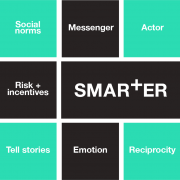
For instance, people are hardwired to over respond to both positive and negative actions of others. We all feel obliged to give back to others the type of behaviour we have received from them. This is what you feel when someone gives you a Christmas card; you feel a strong urge to give a card in return. Communications professionals can do a lot more to harness and share this sense of reciprocity. This is just one behavioural insight.

These new insights are very important. Scientific research shows that rational communication approaches may be less effective than we might think and sometimes actively counter-productive.

The good news is that we now have a better than ever understanding of precisely which emotions or other instinctive thought processes matter – and in what circumstances. The science helps us to analyse the drivers for human behaviour as well providing the tools to better influence them. People may behave irrationally, but they behave in predictably irrational ways.

There is also a big positive to the seemingly unhelpful implication that human decision-making and behaviour is much more complicated than we previously thought. This makes our jobs more difficult but also more valuable: it would be much easier to influence a bunch of rationally calculating robots.

But to truly seize this opportunity, we need to be brave. Applying behavioural science will often mean changing the way we develop insights and solve problems. It is not a term to be used to badge or package the ways we worked yesterday.

This means we need to challenge the models and approaches we typically use and question whether they reflect the new knowledge we now have. We need to ensure they are not just a reflection of our own habits.

If we do then the potential is significant. Adding the science of human behaviour to the art of communications makes campaign ideas better as well as more buyable.


Dan Berry from Hill and Knowlton Strategies’ in-house behavioural insights team, H+K Smarter, will give some more examples and tools at the Global ICCO PR Summit on 30 September 2016 – iccosummit.org


New media are communications' present and future

Jelena Djelic, eKapija interviews Maxim Behar, President of the International Communications Consultancy Organisation (ICCO)

In the past decade, the public relations industry has changed much more than any other business industry. A drastic shift in the ownership of media throughout the world has contributed the most to the process. It was certain during the 1990s that it would happen, but many of us ignored the fact that both us and our clients already had strong ties to the media and the we needed to learn quickly and carefully in order to use the relations as well as possible.

This is how Maxim Behar, the president of the International Communications Consultancy Organization (ICCO) begins his interview for eKapija. The Public Relations Society of Serbia has become a member of this organization this year.

We also talked with Behar about the upcoming Global ICCO PR Summit, the largest gathering of PR experts, to be held in Oxford on September 29-30.

eKapija: How do you see future PR trends, where is PR headed and what should, in your opinion, PR professionals focus on in the future?

– In the past, public relations mostly meant acting as a link between our clients and the media. We were making great efforts to be as creative and innovative as possible. However, there was a limit to innovativeness. The situation has changed completely and PR professionals now manage entirely different requests and tools in doing their job. We have suddenly turned from advertisers and consultants to content managers of our media and the media of our clients. There’s been a clear crossing between public communication channels – public relations, advertising and e-business and the process is getting faster and faster.

Nowadays, many experts express conflicting opinions on who will take the leading role in the future and it is my firm conviction that it will be us, public relations professionals. The reasons are quite simple.

Firstly, we are the only ones in charge of the content, words and expressions in the whole process, and the content is currently the most important part of public communications. Secondly, and in my opinion most importantly, PR professionals are absolute leaders in the two areas of key importance to our clients and their operations – reputation management and crisis communication. We need to focus on these areas in the near future as the basis of our profession’s success.

eKapija: Do you believe that online PR has in a way replaced traditional PR and how do you feel about the transformation?

– This has happened without a doubt and we are all aware of it. The transformation happened overnight, while we were organizing events and press conferences. We simply woke up one day and realized that press conferences and press statements no longer work, that online media are more powerful than anything before and recognized one of its greatest advantages, which we hadn’t been aware previously – cost competitiveness.

Finally, this is what’s most attractive to our clients and we realized this many years ago, but we couldn’t do anything in order to measure the effects of our work and ideas precisely.

photo: Deyan Georgiev/shutterstock.com

eKapija: Based on your personal experience, are PR professionals ready to accept new challenges in the PR area and adjust to current technological trends? Are they prepared to learn and change?

– On the whole, my answer is ‘yes’, but the pace of changes varies from country to country. The fact is that the new media will prevail and that they are the present and the future of communications. What’s expected from PR professionals is to keep track of all new trends and case studies every day, hour and minute, and of course, to create their own.

eKapija: What will be the main topic of the upcoming ICCO PR Summit?

– The most important one is, of course, how to run a successful PR company in the times of drastic changes in our profession. Global ICCO PR Summit is the most important annual event in our industry in the whole world. More than 250 top professionals from all continents will have the opportunity to discuss modern trends in our profession.

There are two main prerequisites for an event’s success – good speakers and enough coffee breaks in which to meet them personally. This year, on September 29 and 30 in Oxford, these prerequisites will be fully met and I’m sure that we will share a great number of new trends, stories and case studies and discuss them to the general benefit of our line of business.

eKapija: What’s your opinion on the future of media? Can content prevail over sensationalism?

– Creating good, brief, attractive, intelligent and professional content is currently the most important element of our profession. We need to be aware of that fact and work hard on it.

eKapija: What is the role of social networks in the PR world? Do you believe that social networks can endanger traditional media?

– Social networks are the most powerful tool we’ve ever had in our hundred-year-old profession. Above all, despite all the apprehensions and concerns, they really are an independent and genuine medium. Theoretically, you can “buy” a journalist, the media, a TV station… but you can’t buy Facebook, you can’t buy Twitter, nor any social network, as they show opinions from all sides.

It is precisely this that is the advantage of social networks – they are interactive and wholly independent, which currently makes them the only medium we can trust and the most important channel that we as public relations experts have at our disposal in order to provide the best service possible to our clients.

http://www.ekapija.com/website/en/page/1529446/Maxim-Behar-president-of-International-Communications-Consultancy-Organization-New-media-are-communications-present-and-future

New media are communications’ present and future

Jelena Djelic, eKapija interviews Maxim Behar, President of the International Communications Consultancy Organisation (ICCO)

In the past decade, the public relations industry has changed much more than any other business industry. A drastic shift in the ownership of media throughout the world has contributed the most to the process. It was certain during the 1990s that it would happen, but many of us ignored the fact that both us and our clients already had strong ties to the media and the we needed to learn quickly and carefully in order to use the relations as well as possible.

This is how Maxim Behar, the president of the International Communications Consultancy Organization (ICCO) begins his interview for eKapija. The Public Relations Society of Serbia has become a member of this organization this year.

We also talked with Behar about the upcoming Global ICCO PR Summit, the largest gathering of PR experts, to be held in Oxford on September 29-30.

eKapija: How do you see future PR trends, where is PR headed and what should, in your opinion, PR professionals focus on in the future?

– In the past, public relations mostly meant acting as a link between our clients and the media. We were making great efforts to be as creative and innovative as possible. However, there was a limit to innovativeness. The situation has changed completely and PR professionals now manage entirely different requests and tools in doing their job. We have suddenly turned from advertisers and consultants to content managers of our media and the media of our clients. There’s been a clear crossing between public communication channels – public relations, advertising and e-business and the process is getting faster and faster.

Nowadays, many experts express conflicting opinions on who will take the leading role in the future and it is my firm conviction that it will be us, public relations professionals. The reasons are quite simple.

Firstly, we are the only ones in charge of the content, words and expressions in the whole process, and the content is currently the most important part of public communications. Secondly, and in my opinion most importantly, PR professionals are absolute leaders in the two areas of key importance to our clients and their operations – reputation management and crisis communication. We need to focus on these areas in the near future as the basis of our profession’s success.

eKapija: Do you believe that online PR has in a way replaced traditional PR and how do you feel about the transformation?

– This has happened without a doubt and we are all aware of it. The transformation happened overnight, while we were organizing events and press conferences. We simply woke up one day and realized that press conferences and press statements no longer work, that online media are more powerful than anything before and recognized one of its greatest advantages, which we hadn’t been aware previously – cost competitiveness.

Finally, this is what’s most attractive to our clients and we realized this many years ago, but we couldn’t do anything in order to measure the effects of our work and ideas precisely.

photo: Deyan Georgiev/shutterstock.com

eKapija: Based on your personal experience, are PR professionals ready to accept new challenges in the PR area and adjust to current technological trends? Are they prepared to learn and change?

– On the whole, my answer is ‘yes’, but the pace of changes varies from country to country. The fact is that the new media will prevail and that they are the present and the future of communications. What’s expected from PR professionals is to keep track of all new trends and case studies every day, hour and minute, and of course, to create their own.

eKapija: What will be the main topic of the upcoming ICCO PR Summit?

– The most important one is, of course, how to run a successful PR company in the times of drastic changes in our profession. Global ICCO PR Summit is the most important annual event in our industry in the whole world. More than 250 top professionals from all continents will have the opportunity to discuss modern trends in our profession.

There are two main prerequisites for an event’s success – good speakers and enough coffee breaks in which to meet them personally. This year, on September 29 and 30 in Oxford, these prerequisites will be fully met and I’m sure that we will share a great number of new trends, stories and case studies and discuss them to the general benefit of our line of business.

eKapija: What’s your opinion on the future of media? Can content prevail over sensationalism?

– Creating good, brief, attractive, intelligent and professional content is currently the most important element of our profession. We need to be aware of that fact and work hard on it.

eKapija: What is the role of social networks in the PR world? Do you believe that social networks can endanger traditional media?

– Social networks are the most powerful tool we’ve ever had in our hundred-year-old profession. Above all, despite all the apprehensions and concerns, they really are an independent and genuine medium. Theoretically, you can “buy” a journalist, the media, a TV station… but you can’t buy Facebook, you can’t buy Twitter, nor any social network, as they show opinions from all sides.

It is precisely this that is the advantage of social networks – they are interactive and wholly independent, which currently makes them the only medium we can trust and the most important channel that we as public relations experts have at our disposal in order to provide the best service possible to our clients.

http://www.ekapija.com/website/en/page/1529446/Maxim-Behar-president-of-International-Communications-Consultancy-Organization-New-media-are-communications-present-and-future

Innovation in creating media impact – The IPREX Blogbarometer

By Michael T. Schröder, IPREX Global President


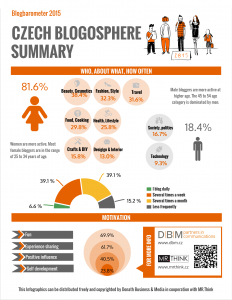
In 2014 a group of nine European IPREX partners decided to study the impact of blogging on the communication industry and conducted an informal online survey among 1,360 bloggers, inviting two non-European countries to participate for comparison.

The second survey, in 2015/2016 had responses from 2,134 bloggers living in 13 countries, including China and Malaysia.

Here are some encouraging results showing bloggers’ attitudes to our industry:

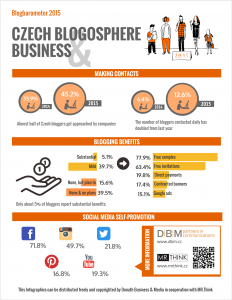
  • 73% of bloggers said they have been approached for PR or marketing reasons,
    27% were contacted weekly and 19% daily. But there are major regional differences: in “advanced technology” countries, a much higher proportion of bloggers is targeted by companies.
  • A majority (85%) of respondents thinks positively about approaches by companies and actually wish for more (52%). Only 7% are reserved about this contact and only 2% are against.
  • Invitations to events, marketing or PR material and product samples or free products are the most commonplace approaches. Astonishingly, only 20% of bloggers received photos or other images from companies.

These are some more general findings about bloggers:

  • Three quarters of all bloggers are female. Although teens do not dominate, two-thirds of the bloggers are younger than 35 years.
  • The most popular blog themes are focused on consumer and lifestyle topics like beauty, fashion, food and travel. The main goals for blogging are sharing information and experiences, having fun and professional development.
  • The highest rated social media channels for blog promotion are Facebook and Instagram.

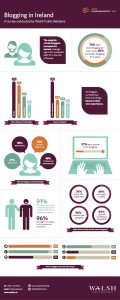
DBM Prague Blogbarometer 2015 summary infographic DMB Prague Blogbarometer infographic 2015 Walsh PR Ireland IPREX Blogbarometer Infographic

The Blogbarometer showed that our industry could improve its relationship with this important media channel significantly using better research, more targeted approaches and more creative engagement.

Interestingly, the Blogbarometer exemplifies one important way in which IPREX has been evolving as an organisation: rather than being a global survey from which partners took sub-sets of data for their own use, it was designed primarily to boost partners’ profiles in their own markets – with the global view emerging from the sub-set of common questions.

This mirrors a shift in our perspective from a “top-down” managed network structure to a platform on which individual partners can operate worldwide. IPREX is inside the agency, rather than the other way around – making each IPREX partner a global agency.

The Blogbarometer worked so well on both levels, generating useful information and news in each partner’s market as well as for IPREX as a whole, that we will continue to run it in a two-year cycle.

ABOUT IPREX

IPREX was founded in 1983 to help independent PR firms deliver high-quality client work in major markets worldwide, and it has evolved into a tightly knit peer group of more than 70 of the world’s most successful communication agencies.

We offer our partners’ clients seamless world-class advice and implementation – and we provide partners with the infrastructure and support they need to win and manage such assignments.

Clients choose IPREX partners for their influence in their own markets and because our management systems make the diversity, innovation and dynamism of owner-managed agencies work to their advantage.

Partners join IPREX for the assurance of high-calibre work for their clients in remote markets, and to develop their agencies in a collegial environment through best practices, new business opportunities and a common program management language.

Partners communicate frequently, review each other’s work rigorously and meet often. When they join forces they’re working with agency owners they know as partners – not strangers united by a brand name and divided by internal competition.

Interel Global Public Affairs Survey 2016

An interview with Fredrik Lofthagen, CEO of Interel

Each year Interel surveys the CEOs of independent public affairs consultancies in 60 markets to gauge the health of the industry. Fredrik Lofthagen talks about the outcomes of this year’s survey and shares his thoughts on the future of public affairs.


What do you think the key takeaways from this year’s survey are?

Our clients around the world are increasingly concerned about political risk – and that’s no surprise given the recent UK vote to leave the EU and the instability that’s causing in Europe.

Further afield, the US elections are also catching the world’s attention as we grapple with what all this means and how businesses can secure a sustainable future for their customers and employees. China continues to develop as an economic and political power, but it’s a political and social culture that businesses can struggle to understand. Combine that with instability in the Middle East, North Africa, Turkey…and the conclusion can only be that political risk is the biggest worry of today. Business hates uncertainty and we certainly have plenty of that at the moment.

We’re not alone in identifying political risk as a major concern for business at the moment. PWC runs an annual CEO survey and geopolitical concern was the number two worry for respondents after over-regulation.

Of course political risk is good for business for us in public affairs, but on the whole, we find that business is not matching these concerns with spending. Spending on public affairs is still a fraction of what businesses spend on marketing for example, which I find strange, given that protecting the business and shaping the operating environment are hot topics which are keeping CEOs awake at night.

What’s your take on what the public affairs profession can do to alleviate concerns about political risk?

My take on it is that we need to do a better job of explaining the potential positive impact on a business’s bottom line of taking a proactive approach to public affairs.

Often the public affairs guys in a business are viewed as risk managers – fighting legislative proposals when they might have an adverse impact on the business. But in reality, the role of the public affairs professional is so much more than that.

Given their deep understanding of the political landscape and their ability to predict what’s coming down the line, they can, and should, play a strategic role in business. Our goal is to position the profession as strategic business partners. In many enlightened companies, that’s already the case, but we’re working to make it the case across the board.

Anticipating change and helping clients to proactively engage were highlighted by the survey as critical to success – can you give us some examples?

We often help clients to avoid legislation altogether, by being part of the discussion with civil servants and politicians, and working as partners in finding solutions that work for business, consumers and society as a whole. If legislation is imposed on you, it’s likely that the costs of compliance will be high. But if you work with legislators to find solutions that meet everyone’s objectives, then the cost burden for business is likely to be less.

We often help clients to form coalitions with other businesses in their sector, to go to legislators with solutions which address the legislators’ concerns and are workable for business. Often these solutions are accepted and legislation is avoided as a result.

We also work with our clients to identify issues which are winning public support and form coalitions around those issues. This was the case with the European Kidney Health Alliance for example, where we brought together all interest groups working on kidney disease, worked for the formation of an MEP group on kidney health and in the end, secured €1million in the EU budget for more research into and support for the disease.

Your survey found that building long term relationships with stakeholders is the strategy which has the most impact? Can you explain a bit more about the benefits of that approach?

Government doesn’t work in a vacuum and needs facts and figures, and business experience to make good law. What works for our clients is to engage regularly with those with an influence over the future of their businesses. We don’t just engage when we’ve got a problem, but build trust by sharing information which helps politicians and regulators to fully understand the business environment and the potential impact of their policy options. We firmly believe that business should be part of the democratic debate.

Social media is having more and more influence on policy makers according to your survey. What role can social media play in a public affairs campaign?

Because of social media, public opinion, and therefore government opinion, can shift in a very short space of time. Most policy makers are on twitter and other social media platforms and closely monitor reactions to their statements and proposals.

We use many of the techniques that brands use in social media to identify influencers and trends and to target our messaging at the people who can make a difference and get messages across. We mobilise public opinion and campaign using social media, to get people to sign petitions or contact their MPs for example. But like all the tools we use, social media is just one part of our armoury and we use it as part of an integrated campaign strategy.

Have you learned any tricks from the PR profession about getting a public affairs message across?

Yes, going back to what I mentioned above about informing and being part of the decision-making process, the important thing for us is to get sometimes very complicated facts across in a compelling, easy-to-understand way.

We use a lot of infographics and brochures to tell stories, show the stages in a process or share statistics. We also use a lot of video and animation.

We recently made a video for Broadcast Networks Europe using lego to tell the story of digital terrestrial television and call for more bandwidth for the service. And we also recently made an animation for a client to show how plans to deepen a quarry would work in practice and what would be done to protect the local water supply.

Attention spans are short, even in politics and it’s important to get the core of the message across in the clearest possible way and in the shortest possible time.

How do you think public affairs will evolve in the future?

I firmly believe that public affairs is going to assume more strategic importance for business. We will be more engaged with blue sky thinking about political and societal change and how that will impact on businesses, their future sustainability and their licence to operate.

We will still fight the big issues of the day on behalf of our clients in the traditional way with members of parliament and civil servants, but we will increasingly find that we and our in house colleagues spend more time preparing the C-Suite for the challenges and, importantly, opportunities which are coming down the line.

We will help businesses to shape their operating environment and will be a recognised and respected part of the democratic process. We will also become a more ‘professionalised’ discipline with transparency, codes of conduct and self-regulation by professional bodies becoming a requirement for us to engage with politicians.


Download the full survey


Communicating at the speed of culture

Written by Neil Kleiner, Head of Social Media and Content, Golin London


This year Golin celebrates its 60th anniversary and the celebrations of the huge achievements of our founder Al Golin are front of mind for us all.  He is truly an inspiration, especially as he still comes to work every day to our Chicago office, despite being 86 years old.

In amongst all Al’s successes, I’ve been also thinking about how the world of PR has changed over the last 60 years. From a world of type writers and hand delivered press releases when Al began, to a world of Facebook, Snapchat mobile and interactions at an unprecedented scale.  A world where, as noted psychiatrist RD Laing said “…change is so speeded up that we begin to see the present only when it is already disappearing.”

How do we keep up with the speed of culture? How can we make our brands relevant to the conversations of the day?

Every day we post 500 million tweets and upload nearly 900,000 hours of video to YouTube… how do we manage information at such unprecedented scale?

The world has become an incredibly noisy place and in social media sites marketers are more part of the problem than the solution.  For over a decade social media professionals (myself included) have turned brands into always-on publishers and in a lot of cases we’ve struggled to have something interesting to say or maintain a compelling way to say it.

We’ve just added to the noise.

Let’s be honest, there are very few people who actually look forward to seeing a promoted post on their News Feed when all they really care about is what their friends or family are up to.

This is the hegemony of advertising.  Interruption.  Taking something we care about and cutting it in half or putting up barriers.  No wonder it pisses us off.

It’s why we’ve had to wrap our messages in a creative wrapper for the last 100 years…..to buffer the blow of interruption.

But in a world transformed by infinite choice, interruption is something that audiences don’t have to tolerate any more…they just go somewhere else that doesn’t make it annoying to engage with the things they care about.

Simply put, marketers need to develop a better relationship with the noise…discovering new ways to analyse it and cut through it, rather than try and beat it.  It’s our biggest challenge but also our biggest opportunity.

If we can use technology to analyse conversations across the internet in real time, we can understand what audiences want to talk about and the things they care about.  We don’t have to interrupt.

We can listen and join in.

Add value.

Have an opinion.

Help solve problems.

Or just make people laugh.

It’s a way or pairing technology and creative specialists to ultimately create more welcome communications. Golin developed our own technologies to answer this challenge and launched The Bridge in 2011.

We’ve seen this type of strategy grow in recent years.  The social newsroom / command centre.  Social media marketing has always been about reactivity.  Real time marketing has us all looking for our “dunk in the dark” moments.

But data driven communications are not just the sole preserve of social or digital marketing.  Data should be the fuel that drives all public relations activity, because there has never been a better time to do what we do.  It’s certainly got more complex over the last 60 years but rather than fear “the noise”, we should be investing in technology and the smart people who help us understand it.

Anything else is just guessing.


17 interviews in the Cannes

Blog post by Russell Goldsmith, Director, Conversis Corporate


There are a number of ways to ‘do’ Cannes Lions – attending presentations in the Festival Hall, networking on the beach drinking plenty of rosé, having meetings in the posh hotels, or if you’re really lucky, partying on the private yachts listening to Take That play an exclusive gig (sadly that wasn’t me!).

My experience was slightly different, as I spent most of my time in ICCOs Cabana, aptly named the House of PR, where I was recording interviews for my csuitepodcast series.  However, what this allowed me to do was get an incredible perspective of what was happening across a whole range of aspects of the event, as in the three shows I recorded, I interviewed 17 guests that included Award Judges and Winners, CEOs, Creative experts, Data experts and even a spoken word artist who is now working with brands as a Social Influencer (and yes, I had to look up what a spoken word artist was too before I met him).

What this meant however, was that through my podcasts, I gained a wealth of insight as to what different people look to take away from Cannes, plus I got to chat in depth about some truly creative campaigns that you can only have the utmost respect for the individuals who come up with them – I mean seriously, someone, somewhere in a brainstorm, said, “I’ve got a cracking idea.  Why don’t we send kids who have broken their arms a transfer of their x-ray for them to stick on their cast, which can have a bar code, so that whilst their arm is healing, they can go into a supermarket, scan the bar code, and get free calcium rich milk” – by the way, someone must have said that at some point because that was a Gold winning campaign in the Health Lions for Anchor Milk in New Zealand by Fonterra and Colenso BBDO.

There is, without doubt some amazing creativity on show throughout the week and you cannot be anything but be inspired by it all.  There was, however, one stand out theme that seemed to run through a lot of what I saw, and that was Virtual Reality, an example of which was a winning campaign by DDB Remedy for Excedrin®, an OTC migraine treatment in the US, which helped to address the issue that people often respond to someone with a migraine by just saying that it’s nothing more than a headache and not serious!   DDB built a simulated VR experience and mobile app using insight from migraine sufferers so that they could personalise their migraine and share it with friends and family to gain their empathy.

Given I was sitting doing my interviews in the House of PR, it was no surprise that, whilst I was being wowed by all this creativity, a lot of the talk around me in the Cabana was why weren’t the PR agencies leading this work, submitting more entries for the awards, and even winning in their own category – only five of 84 PR Lions were awarded to PR agencies.

It’s clearly an area that needs to be addressed and talking to the likes of Richard Millar, CEO for H+K Strategies UK and Regional President for Europe, he is doing something about it in the talent he is recruiting.  Richard even said that he couldn’t remember the last time he interviewed someone with a typical PR background and that H+K are now hiring data scientists and more craft-led creatives, although essentially, he sees his agency as a canvass for a multitude of different skills and passions that they can bring to the benefit of the client who needs to engage with the public.

One observation I did make though, when I finally got out of the House of PR and had a wander around, was that as grateful as I was for all the free food and drink I consumed at the Facebook and YouTube beaches, where was Weibo and WeChat? It’s something I pay far more attentional to now I work for translation agency, Conversis, as a lot of our time is spent looking into cultural understanding, something that’s essential when localising content for international marketing, and it’s an area that has fascinated me since working for the company.  A lot of our agency clients would have been at Cannes, and so that was the other reason I was there – it wasn’t all about chatting to industry experts whilst sipping wine overlooking the beach!  However, for an International Festival of Creativity that spent a lot of time talking about social influence, it felt like a huge chunk of the online population wasn’t represented – (Free) Food (from Facebook and YouTube) for Thought perhaps for next year?

Listen to the csuite podcasts:

Show 24 – Cannes Lions I

Show 25 – Cannes Lions II

Show 26 – Cannes Lions III

www.conversis.com

PR In Africa: Changing The Narrative


Article by Yomi Badejo-Okusanya, President of the African Public Relations Association (APRA)


Many years ago, The Economist magazine carried a cover story describing Africa as a ‘hopeless continent’. Several years later, The Economist reversed itself by coming out with another cover titled ‘ Rising Africa’. There lies the paradox that is Africa- it’s in its narrative! Undisputedly the next frontier in global development, Africa has witnessed impressive growth from foreign direct investment compared to other parts of the world. The disadvantage of our infrastructure deficit has resulted in massive funds injection, which presents significant opportunities for public relations practitioners on the continent.

The origins of Public Relations practice in Africa are somewhat hazy. What is clear though, is that  a substantial dose of public relations was used in Africa during the Second World War not just to encourage Africans to enlist in the home armies of their various colonial masters, but also to keep the war propaganda machine going on the continent. During periods of colonial rule, European trading companies like the United African Company (UAC) engaged public relations, perhaps for the very first time, in the area of private sector business. Many government organisations and agencies soon caught on and appointed PR executives. The first set of PR professionals were mostly media and Information Officers of government organisations.

The 1960’s and 70’s were characterised by struggles for, and the attainment of political independence. The effect was the entrenchment of one form of democratic rule or the other across the continent. In these nascent democracies public communication, especially public relations, was an imperative but this new found opportunity was rather short-lived as many African nations soon fell under the jackboot of military coups. A failure of public relations perhaps? Whatever the reason, military takeovers severely stunted the growth and development of public relations practice. Happily, the late 1980’s and 90’s brought about a resurgence of democratic rule in Africa, with an attendant rise in the engagement of public relations.

PR in Africa had hitherto been largely media-centric because the pioneers of the profession were journalists and broadcasters. But over time, its further application in solving marketing and brand challenges, has led to the deepening of the profession across board. Such tools include Strategy, Corporate Social Responsibility, content development & management, reputation management  and creativity.

Key PR practice centres on the continent are South Africa, Kenya, Nigeria and Egypt, with South Africa taking the lead. These countries are located in southern, eastern, western and northern Africa respectively.  South Africa’s leading role is understandable considering that most public relations networks and global corporate giants have headquartered their African operations in South Africa. The biggest consumers of public relations are telecommunications companies, with banks, retailers, the entertainment industry and IT also gaining a fair share of the market. Naturally, PR consulting practices have grown over the years in line with demand. However, with the exception of South Africa, most practices have remained sole proprietorships or partnerships.

As public relations has developed on the continent, so also has the establishment and operations of professional public relations associations. The first association was founded in 1956 in South Africa followed by the Nigerian Institute of Public Relations  in 1963.  The Public Relations Society of Kenya was inaugurated in 1971. The umbrella body for public relations associations- the Federation of African Public Relations Associations, was established in 1975 with the sole mandate of developing PR as a tool for selling Africa’s positive image. FAPRA became APRA in 2008 and began to admit individual members in addition to national associations.

In spite of the considerable gains, there is still a lot of ground to cover. For instance the lack of clarity about the value that public relations brings to the table remains an issue. Perhaps because its value is difficult to measure, lack of appreciation for the practice of PR as a profession in its own right is also an issue. Measurement and evaluation continue to be a challenge, as is the dearth of data across the continent. PR also suffers from the intrusion of its twin cousin-professions- journalism and advertising. Today, many markets see PR as little more than an extension of journalism, thus denying PR of its much needed professional and financial regard.

If the narrative must change, it must change from within so that we can take advantage of the significant opportunities that ‘Rising Africa’ presents. Whether the conversation is about the continent or the practice, there is a glaring need to change the narrative.

Yomi Badejo-Okusanya is the current President of the African Public Relations Association (APRA), a Fellow of the Nigerian Institute of Public Relations and Chief Executive of CMC Connect Burston Marsteller, Lagos, Nigeria.

Crystal Balling the Cannes Festival of Creativity by Karen Strauss

Article by Karen Strauss, Partner, Chief Creative & Strategy Officer at Ketchum. 


When the wise people at the Cannes Lions International Festival of Creativity put together 8 days of inspiring content for the international creative elite, they are curating workshops and sessions to hit the big issues keeping creative leaders up at night.

This year’s line-up looks provocative, marked by a whiff of alarm around how truly difficult it’s become to cut through all the content pollution.  After poring over hundreds and hundreds of seminar titles and descriptions, here’s what I expect will be the buzz on the Riviera.

STANDING OUT HAS NEVER BEEN HARDER – The boldface speakers in Cannes will be cajoling marketing communicators to invent new ways of telling stories.  Innovator Anna Wintour will urge the industry to steal a page from “Hamilton,” which literally invented a new genre of musical theatre storytelling; Academy Award-winning director Alejandro Inarritu will advocate the kind of mould-breaking that produced “The Revenant” and “Birdman,” and Barton F. Graf founder Gerry Graf will rail against groupthink and insist that finding one original-thinking creative partner is the only path to elusive breakthroughs.

A great rallying cry for novelty.

IS VIRTUAL REALITY AND 360 VIDEO THE ANSWER? – Nobody will leave Cannes without Virtual Reality and 360 experiences, yet given the ubiquity of these technologies, one has to wonder if they’ll be stand-out strategies or instantly too commonplace.  Google is promising immersive experiences that enhance storytelling; Samsung’s VR and 360 showcase will demonstrate how to “engage culture and experience compassion”; and MOFILM will share “View From Above,” (http://viewfromabove.emirates.com/3d), its incredible aerial film project that used drones to film 18 destinations where Emirates flies, allowing travellers to experience each city with remarkable perspective.

Trailblazing immersive experiences.

IS SEX THE ANSWER? – Better connections with consumers may be as primal as plumbing their sexual desires, and this year in Cannes, sex is on stage.  My friends at Flamingo believe a generation’s sexuality is a key indicator of its drivers and values and that each generation’s approach to sex is different.  They’ll argue that recognizing sexual attitudes are a path to connecting with broader hopes and dreams.  Another panel with sex therapist Esther Perel will draw connections between online dating and brand promiscuity today, providing tips for cultivating desire in all kinds of relationships.

Sex plays to our primitive instincts.

IS HUMOUR THE ANSWER? – In winning over audiences, comedy has long been king – and thankfully in Cannes, “queen.” The female SNL trio of Cecily Strong, Aidy Bryant and Vanessa Bayer will make the case for women’s humour; Rashida Jones, a comedy writer and star of “Parks & Recreation” will reveal how humour can shine a light on important issues; and Mike McAvoy, the CEO of The Onion, will caution that “if you’re not having any fun with your brand, you’re doing it wrong.”

Laughter IS the shortest distance between two people.

DURATION & EPHEMERA MATTER – Beyond the topics, tone and technology, the length of content – and whether it’s ephemeral or not – takes on added importance in Cannes.  The Ephemeral Web is how people consume content every day, so how can brands create lasting messages when they self-destruct?  Embracing ephemerality to ignite creativity will be a hot topic.  In one session, we’ll consider whether long-form branded video content is the answer to shorter attention spans, based on new research around social media viewing habits.

Size matters, just what size is the question.

HAS CONTENT KILLED ADVERTISING? – And the mother lode – can advertising be saved?  One CCO wishes it weren’t such a dirty word, and urges her industry to not let words like content and storytelling replace “traditional” advertising in constructing brand purpose.  Conversely, a pair of advertising strategy officers will start a movement to stop advertising to save the industry. At the heart of the debate is ad blocking, and whether creativity and technology can come together to deliver digital experiences that consumers love rather than block.   Seems advertising is fighting for its life in Cannes.

Will it survive the week?

Karen is leading a panel this year titled “Content for the Ages, All of Them” that will examine age-agnostic marketing.  It is scheduled for Wednesday, June 22 at 14:30 in The Forum.

For full schedule see ICCO Guide to Cannes Lions: http://www.iccopr.com/icco-guide-to-cannes-lions/